“No one has yet discovered any warlike purpose to be served by the theory of numbers… and it seems unlikely that anyone will do so for many years.”
G.H. Hardy
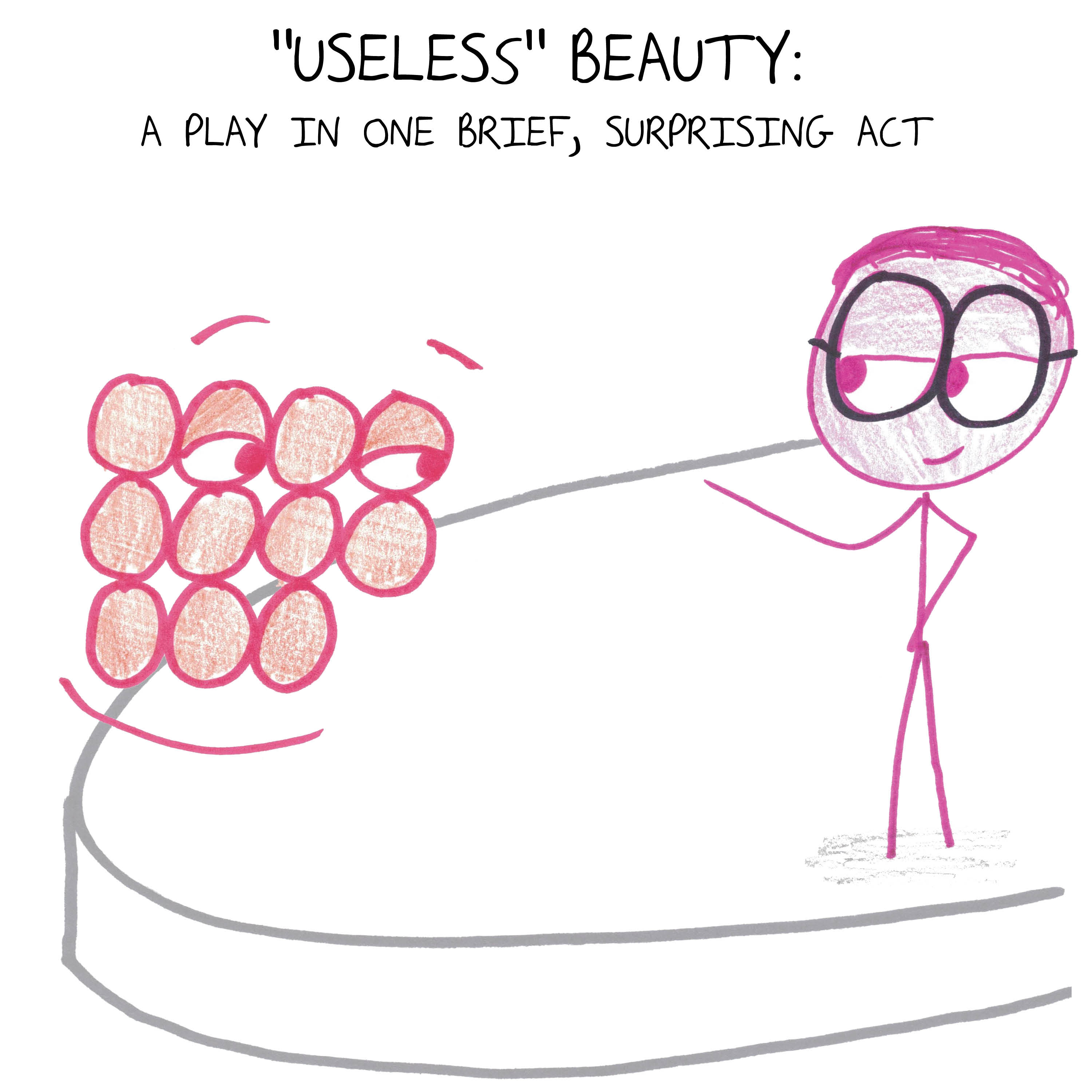
SCENE: An empty stage. G.H. Hardy, looking a bit abstracted and cantankerous, greets the inscrutable object of his platonic affections: the prime numbers.
Hardy: You know what I love about you?
Primes: Tell me.
Hardy: I love your uselessness.
Primes: My what?
Hardy: You know. How useless you are. Your impracticality.
Primes: Gee—thanks, Hardy. I’ve never received a sweeter dismissal of my existence.
Hardy: You know what I mean.
Primes: I promise you I don’t.
Hardy: Your purity. Your aloofness. Here I am in this petty world of money and war, and you’re not merely far away—you’re in another plane entirely. Cold. Beautiful. Utterly beyond contamination. Beyond even the possibility of contamination.
Primes: And if I got contaminated? What then? Would you cease to love me?
Hardy: I’m just saying that you exist for yourself. You’re abstract, elemental, born of pure logic. You don’t waste your time helping scientists to build bombs, or nations to drop them, or bankers to finance them. You are truth for its own sake.
Primes: You’re saying I can’t be useful.
Hardy: Yes, and that’s a good thing!
Primes: You talk like you know me, but you don’t, Hardy. Nobody does.
Hardy: I know you well enough. I know you follow no rule in your virtually random motions through eternity. I know that you fade and fade and fade but never vanish. I know that you’ve got secrets beyond my ken, and secrets beyond those, too.
Primes: Oh, Hardy.
Hardy: What?
Primes: You don’t know the first thing about secrets.
Hardy: What are you saying?
Primes: Nothing.
Hardy: You’re saying that you’re useful? You’re telling me that someday people are going to turn to numbers with 500 or 1000 digits—numbers that exceed the total of particles in the universe, numbers so massive they cannot actually enumerate anything—and, just because these numbers have no factors, they’ll be exploited towards some sinister purpose?
Primes: You don’t think it could happen.
Hardy: Well, it doesn’t strike me as likely.
Primes: Because you’re a pure mathematician, right? And the things that you study are of no value to the plebian masses?
Hardy: In a manner of speaking.
Primes: You know what I love about you, Hardy?
Hardy: Tell me.
Primes: I love your uselessness.
 Math with Bad Drawings
Primes are useful!