Relates to another problem I like: given k such serial numbers sampled uniformly from 1 through N, what is the most efficient way to estimate N?
(Tempting answer: “double the average of your data.” This is an unbiased estimator, but a fairly high-variance once; you can do better by just taking the largest number you’ve seen so far, and multiplying by (k+1)/k.)
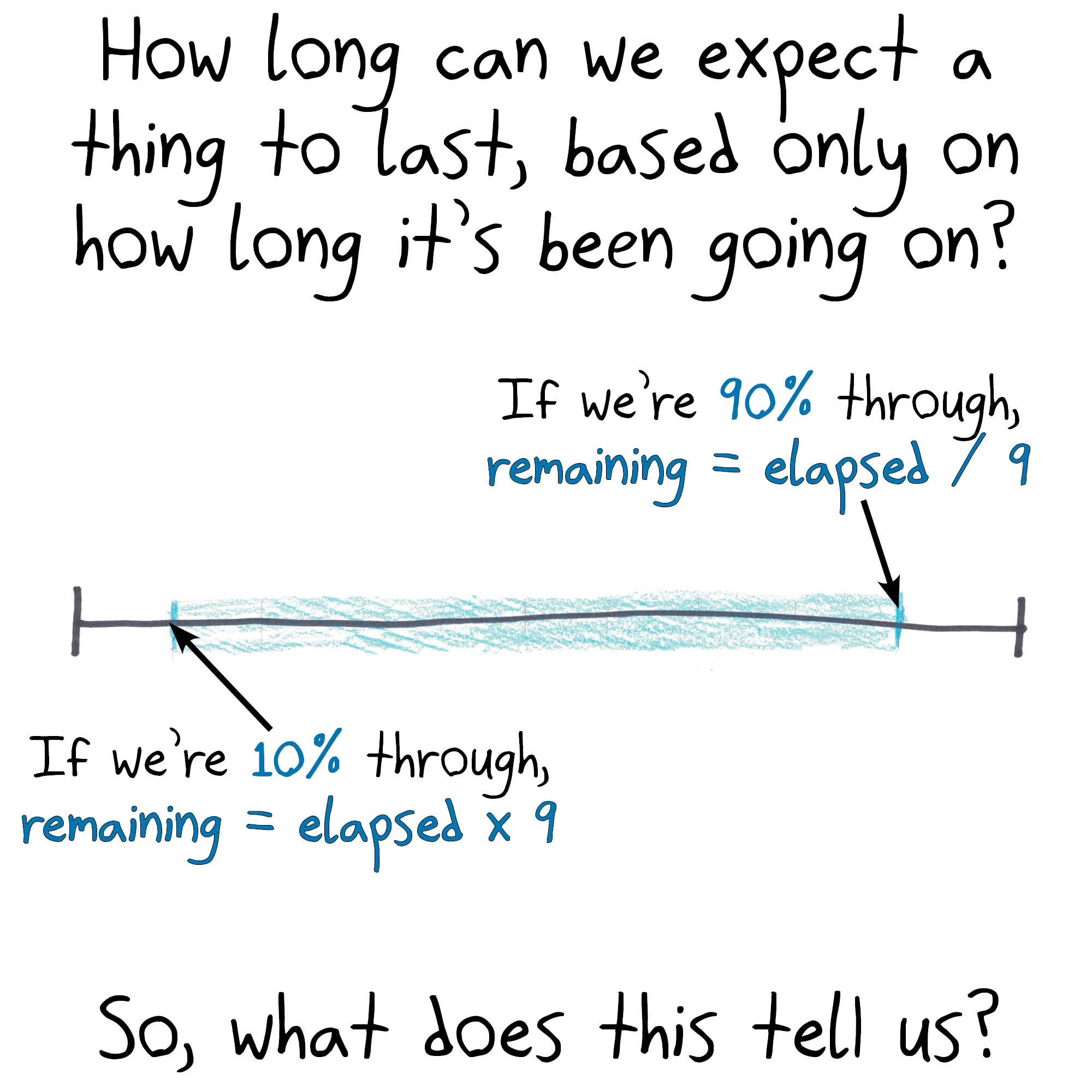
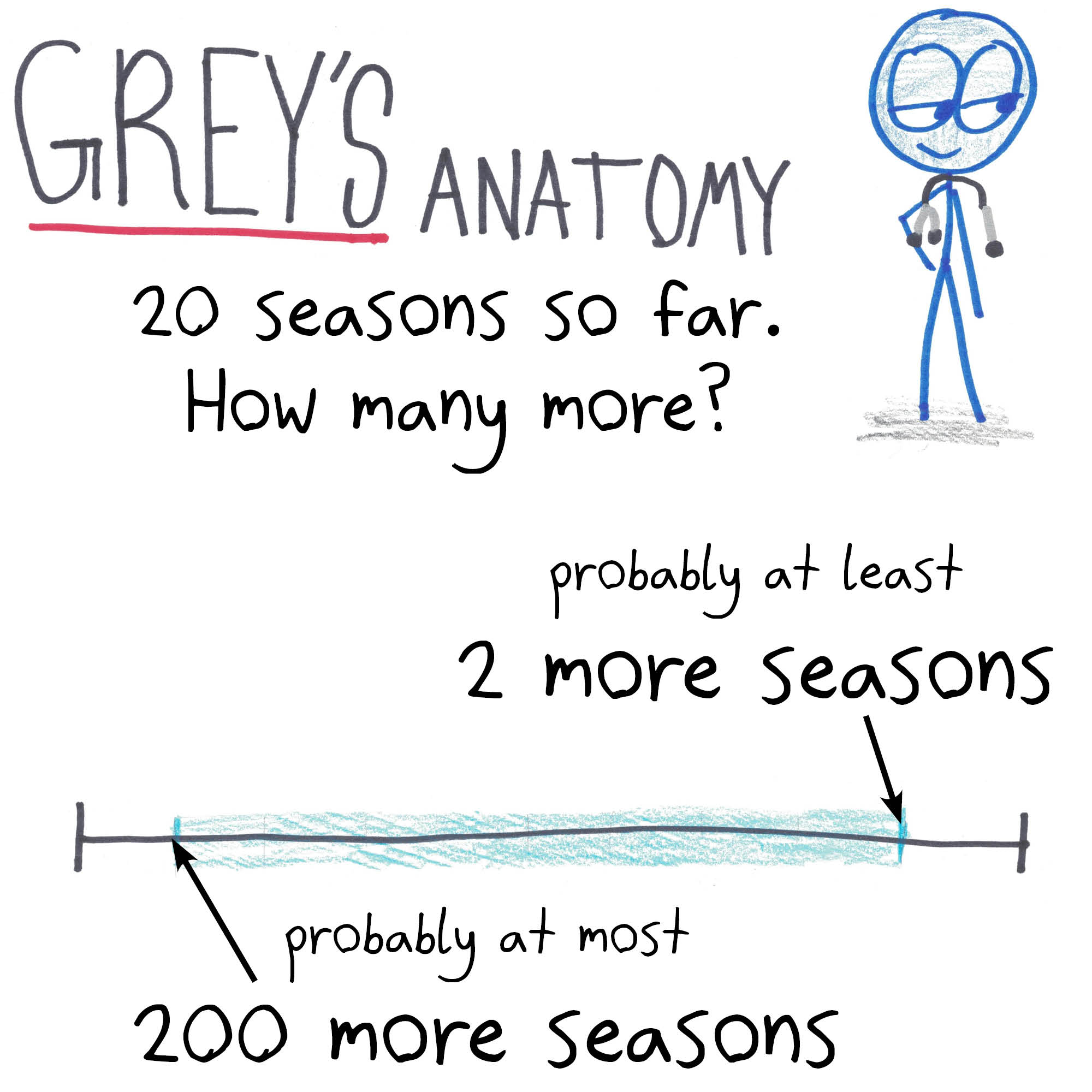
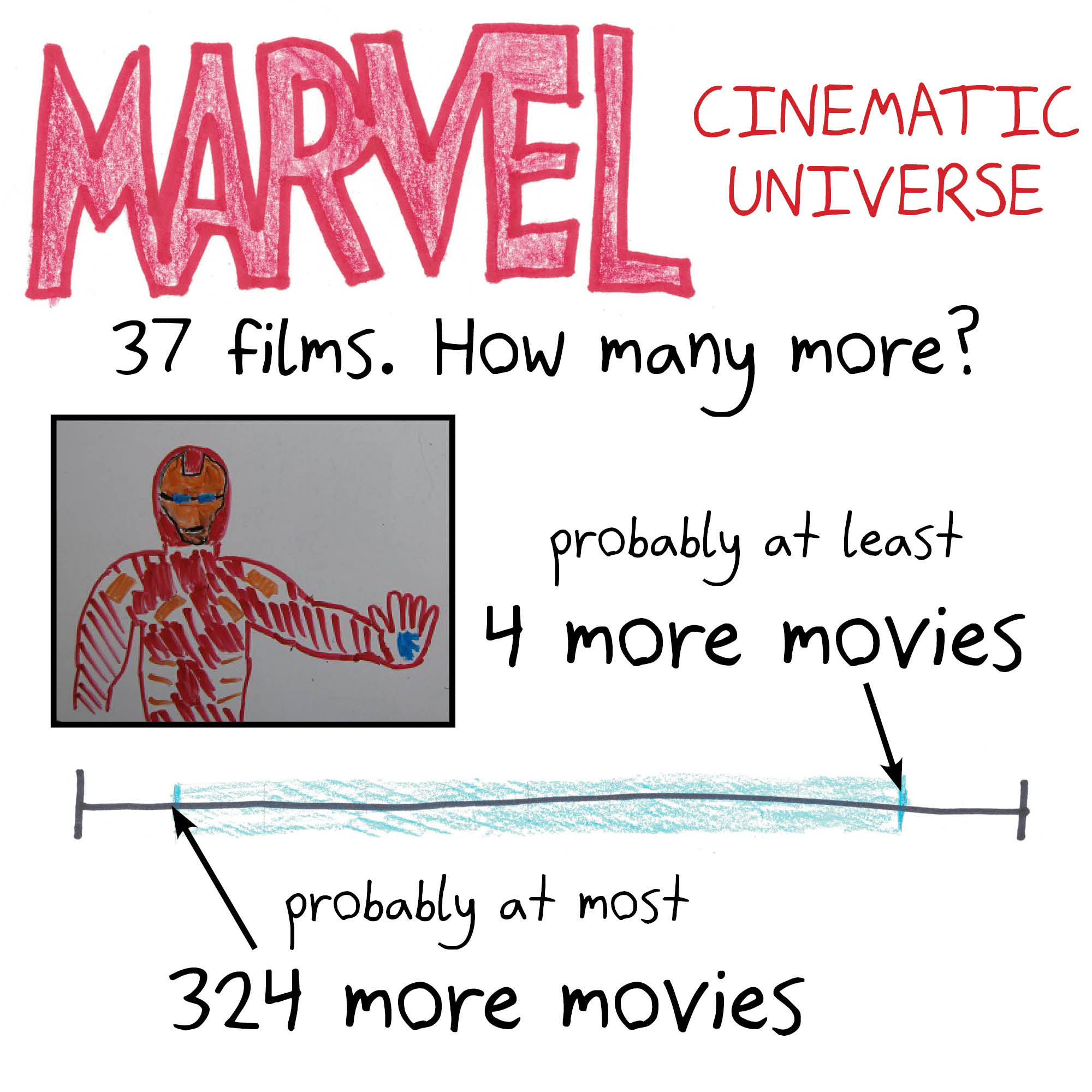
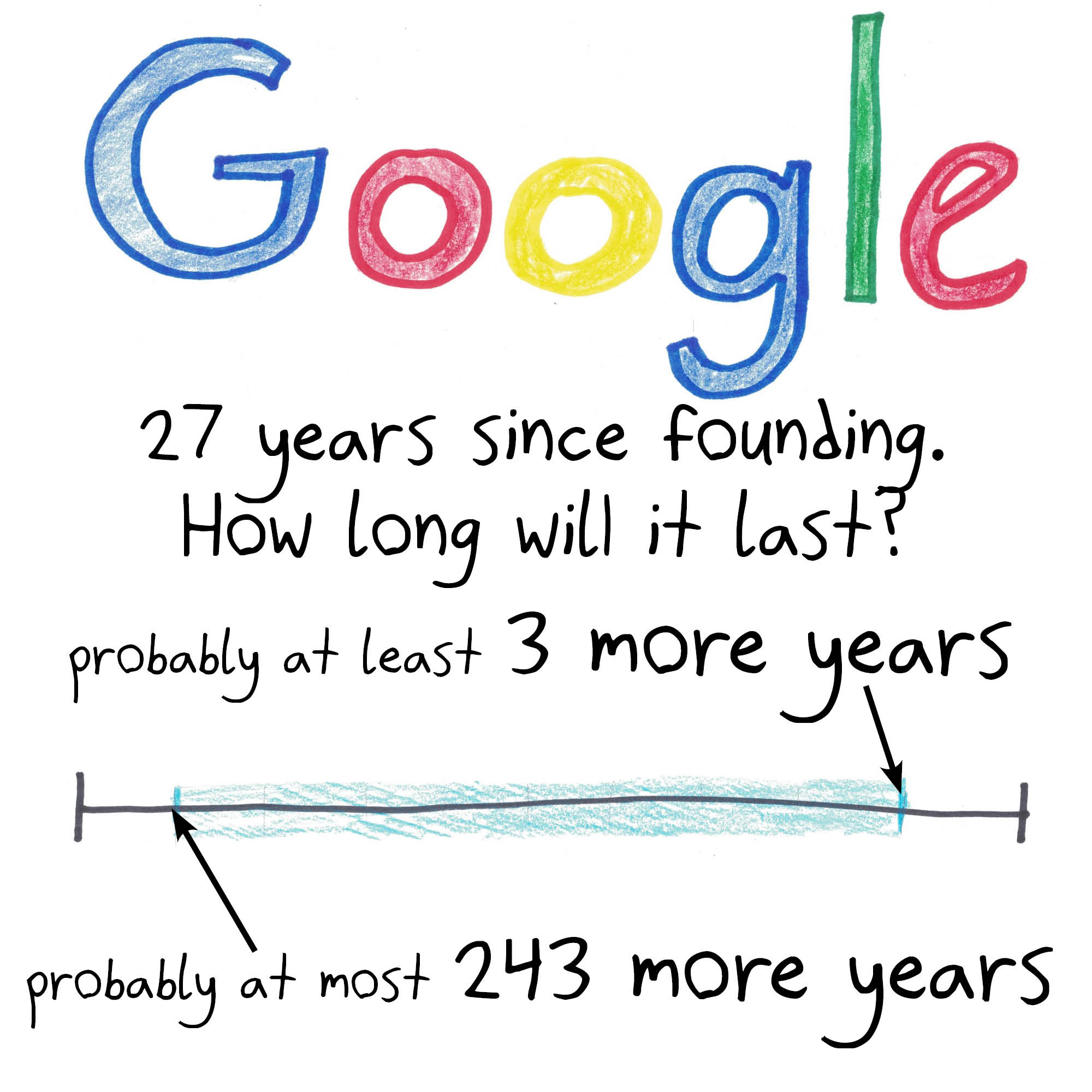
Well, these are all very bad estimates in the sense that they take no information about the phenomenon itself into account… but if you have no such information, these are perfectly good estimates!
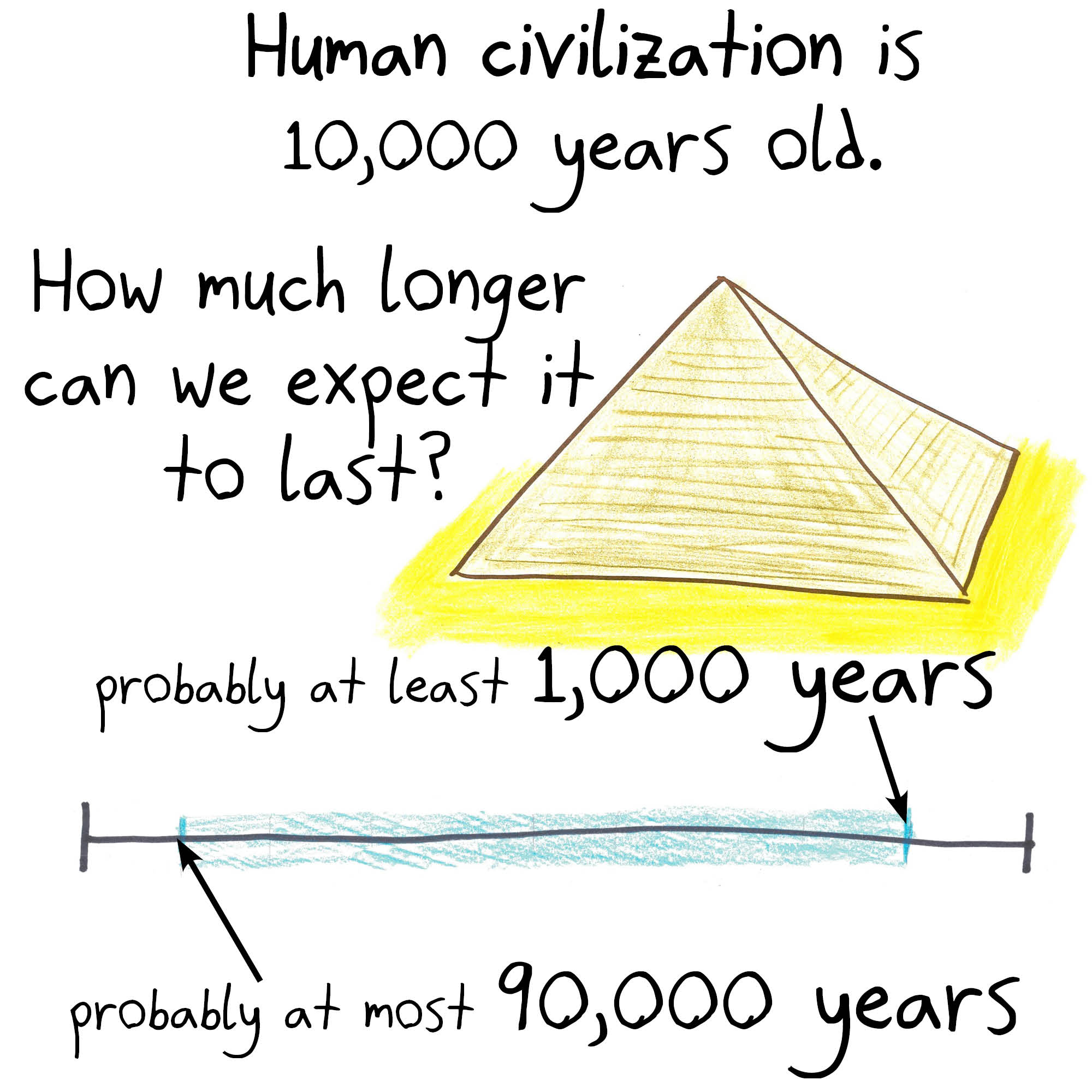
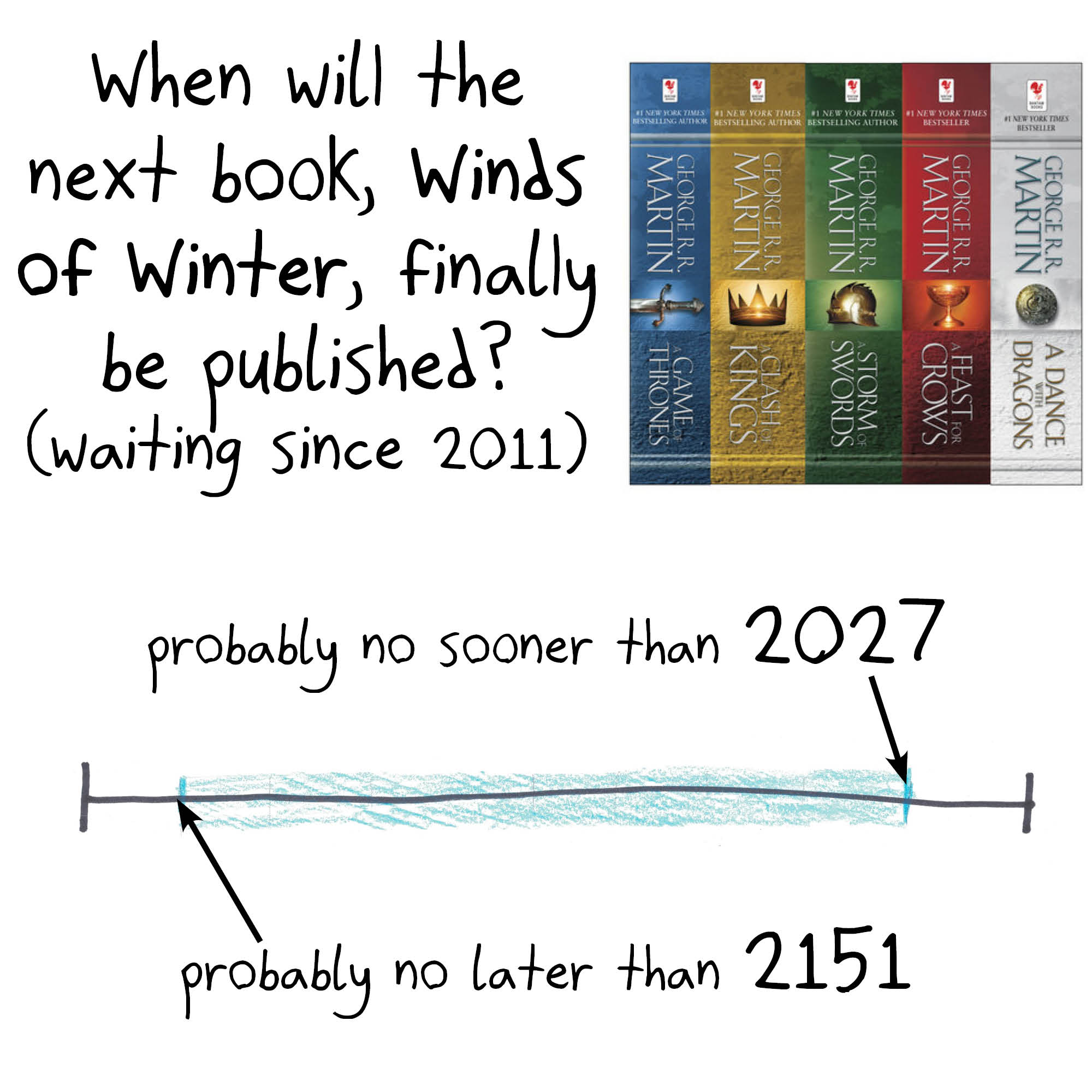
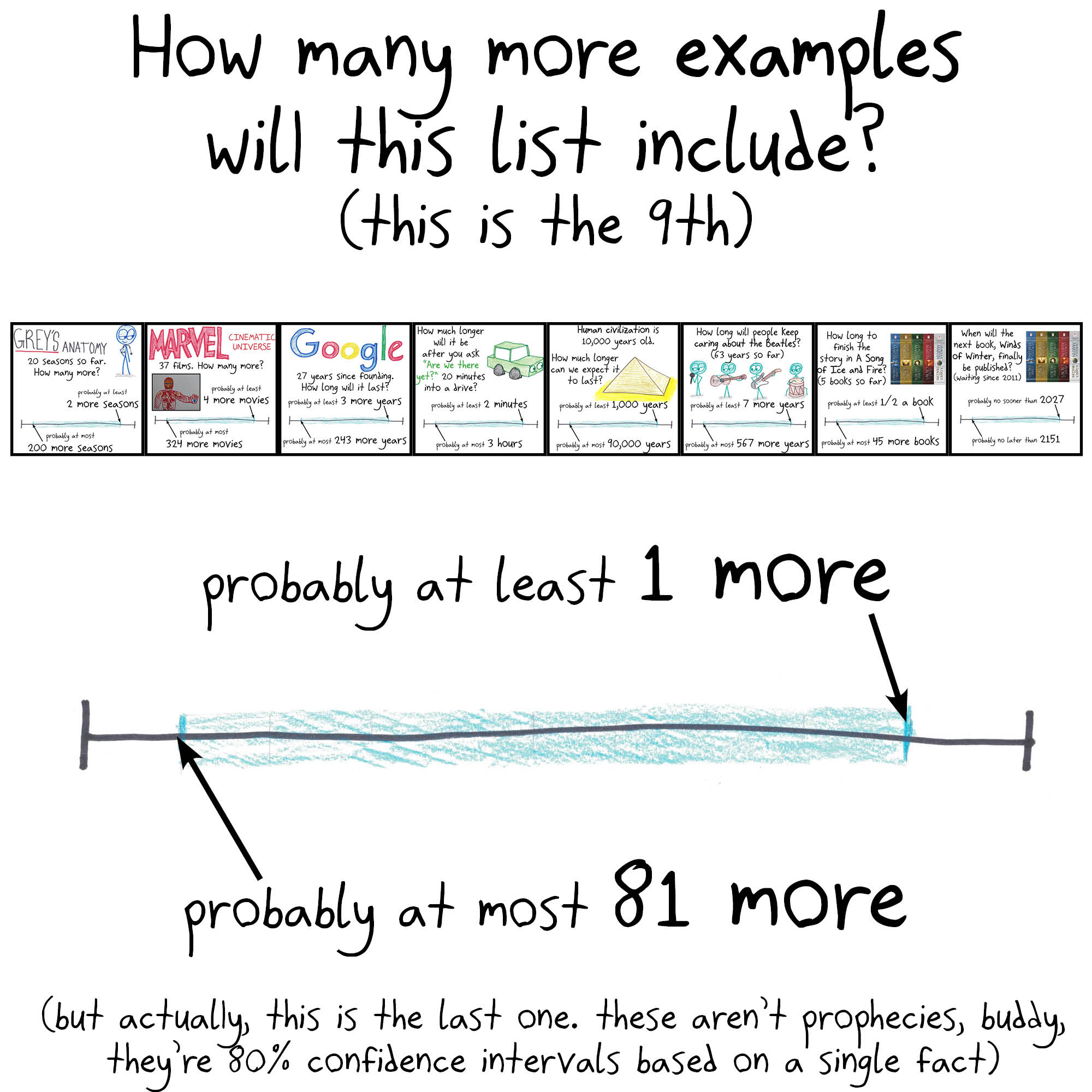
Here’s one that is somewhat relevant at the moment: When will the USA collapse? (Currently existing since 1776) The 80% Answer: Between 2053 and 4266. We have some time.
Ha, love this topic! “Are we there yet?” is such a perfect entry point into math that most people don’t even realize is math. It’s secretly a lesson in rates, ratios, estimation, and maybe even the psychology of waiting. I’d be curious to see a deeper dive into why the last 10% of a trip always feels longer than the numbers suggest. It reminds me of home renovation projects too, whether you’re waiting for a road trip to end or a kitchen remodel to be completed, the final stretch always seems to take the longest. I noticed a similar discussion about project timelines on Oakville Kitchen Experts, where managing expectations is just as important as the actual work. Another great one, Ben, your bad drawings somehow explain this stuff better than good drawings ever could!
Good evening folks! A gaming review video piqued my interest regarding new progressive jackpot opportunities online. I navigated to https://hammersmithbb.co.uk/ and tried a few spins on a featured slot with high volatility. Landing three scatter symbols triggered an epic bonus payout that covered my monthly bills. For slot fans based in the United Kingdom, it provides great security and fun.
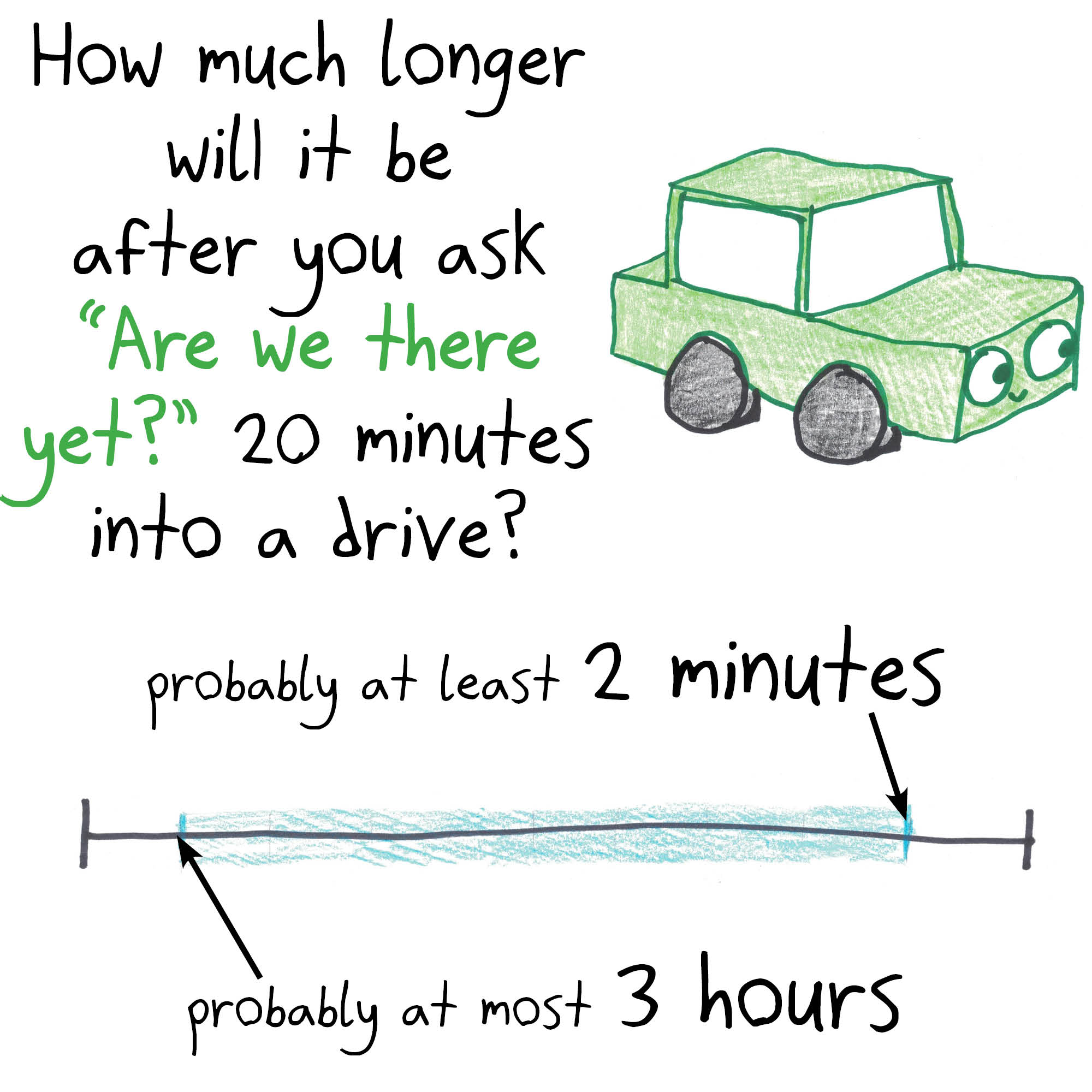
Such a clever breakdown! Estimating remaining time based purely on how long something has already lasted is strangely counterintuitive. It immediately brings back road trip memories of kids asking that classic question from the back seat while passing the time dodging traffic in Crossy Road —where mathematically, the answer to “are we there yet?” really is “never”!


A closely related problem is: given the serial numbers of several captured tanks, how many tanks might the enemy have?
https://en.wikipedia.org/wiki/German_tank_problem
(This is why serial numbers, especially those of military equipment, usually aren’t really serial anymore.)
Oh yes, I love this one!
Relates to another problem I like: given k such serial numbers sampled uniformly from 1 through N, what is the most efficient way to estimate N?
(Tempting answer: “double the average of your data.” This is an unbiased estimator, but a fairly high-variance once; you can do better by just taking the largest number you’ve seen so far, and multiplying by (k+1)/k.)
😂😂
I was thinking that these are true … except if the process has an exponential lifetime. Right?
Well, these are all very bad estimates in the sense that they take no information about the phenomenon itself into account… but if you have no such information, these are perfectly good estimates!
Here’s one that is somewhat relevant at the moment: When will the USA collapse? (Currently existing since 1776) The 80% Answer: Between 2053 and 4266. We have some time.
Now I can’t stop thinking about road trips lol. @pizza edition
Ha, love this topic! “Are we there yet?” is such a perfect entry point into math that most people don’t even realize is math. It’s secretly a lesson in rates, ratios, estimation, and maybe even the psychology of waiting. I’d be curious to see a deeper dive into why the last 10% of a trip always feels longer than the numbers suggest. It reminds me of home renovation projects too, whether you’re waiting for a road trip to end or a kitchen remodel to be completed, the final stretch always seems to take the longest. I noticed a similar discussion about project timelines on Oakville Kitchen Experts, where managing expectations is just as important as the actual work. Another great one, Ben, your bad drawings somehow explain this stuff better than good drawings ever could!
Good evening folks! A gaming review video piqued my interest regarding new progressive jackpot opportunities online. I navigated to https://hammersmithbb.co.uk/ and tried a few spins on a featured slot with high volatility. Landing three scatter symbols triggered an epic bonus payout that covered my monthly bills. For slot fans based in the United Kingdom, it provides great security and fun.
Such a clever breakdown! Estimating remaining time based purely on how long something has already lasted is strangely counterintuitive. It immediately brings back road trip memories of kids asking that classic question from the back seat while passing the time dodging traffic in Crossy Road —where mathematically, the answer to “are we there yet?” really is “never”!
Time moves VERY differently when you’re sitting in a car as a kid. @Tag 2